Having a sore on my leg for some 5 years, which would itch so much i would have to scratch it making it bleed, after two years I made first trip to Doctor "A." who took a Biopsy it came back benign and then the doctor burnt it off with Liquid Nitrogen & was told that it would not come back, but it came back within a week later.
Went to Doctor "B" different practice who gave me a tube of steroid cream which stopped it itching but would not heal, after three or four visits & the same amount of tubes I lost my faith in the medical profession & suffered it for another two years plus.
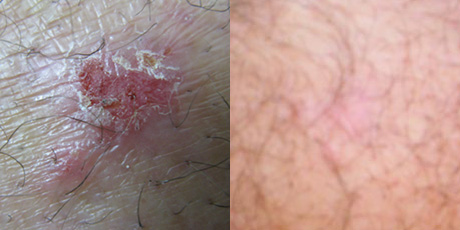
My wife reading an article in a local Newspaper about Dr Chris Reynolds & Wheatgrass, she talked me into going to see him, who gave me three sachets of wheatgrass extract, after the second day the itching had completely gone & before i had used the first sachet the actual sore had gone leaving a slight red scar tissue that is below skin surface, we are amazed at the healing affect of wheatgrass & are still using it daily, also wheatgrass shots my wife & I take daily.
P. B. Queensland. Australia. 11 June, 2009
Comment:
In sunny Queensland, sunspots or solar keratoses are extremely common. I have seen many patients with both arms, head and face literally covered with hundreds of them. The standard medical approach is to freeze these lesions off with liquid nitrogen. This may work, but scarring and thinning of the skin over a period of time renders it vulnerable to injury and infection.
My approach is somewhat different (I haven't used skin damaging liquid nitrogen for many years), and that is for the patient to apply wheatgrass extract on alternate days, and persevere. In my experience, the lesions disappear within a month or so as shown in this case. Continued daily preventative use of wheatgrass (plus protective clothing) also helps damaged skin recover while preventing development of new lesions.
Dr. Chris Reynolds.